# 1、JS 构造函数
# 1.1 构造函数是一个普通的函数,首字母大写
- 1、函数体内部使用了 this 关键字,代表了所要生成的对象实例。
- 2、生成对象的时候,必须使用 new 命令。
- 3、构造函数也可以接受参数
var Vehicle = function(name) {
  this.name = name;
};
var v = new Vehicle("小话");
2
3
4
# 1.2 构造函数分为 实例成员 和 静态成员
实例成员: 实例成员就是在构造函数内部,通过 this 添加的成员。实例成员只能通过实例化的对象来访问。 静态成员: 在构造函数本身上添加的成员,只能通过构造函数来访问
function Star(name, age) {
  //实例成员
  this.name = name;
  this.age = age;
}
//静态成员
Star.sex = "女";

let stars = new Star("小红", 18);
console.log(stars); // Star {name: "小红", age: 18}
console.log(stars.sex); // undefined     实例无法访问sex属性

console.log(Star.name); //Star     通过构造函数无法直接访问实例成员
console.log(Star.sex); //女       通过构造函数可直接访问静态成员
2
3
4
5
6
7
8
9
10
11
12
13
14
# 2、Object.create 实现原理
var a = Object.create(b)方法创建一个新对象,使用现有的 b 对象来提供新创建的 a 对象的 __proto__。方便新建的对象 a 继承对象 b 的方法属性。
简单来说就是把 a.__proto__ = b
简单示例:
var obj = {
  name: "xiaohua",
};
var child = Object.create(obj);
console.log(child.__proto__ === obj); //true
2
3
4
5
常用来解决类的继承: Father.prototype 就是原型,它是一个对象,我们也称它为原型对象。原型的作用,就是共享方法。
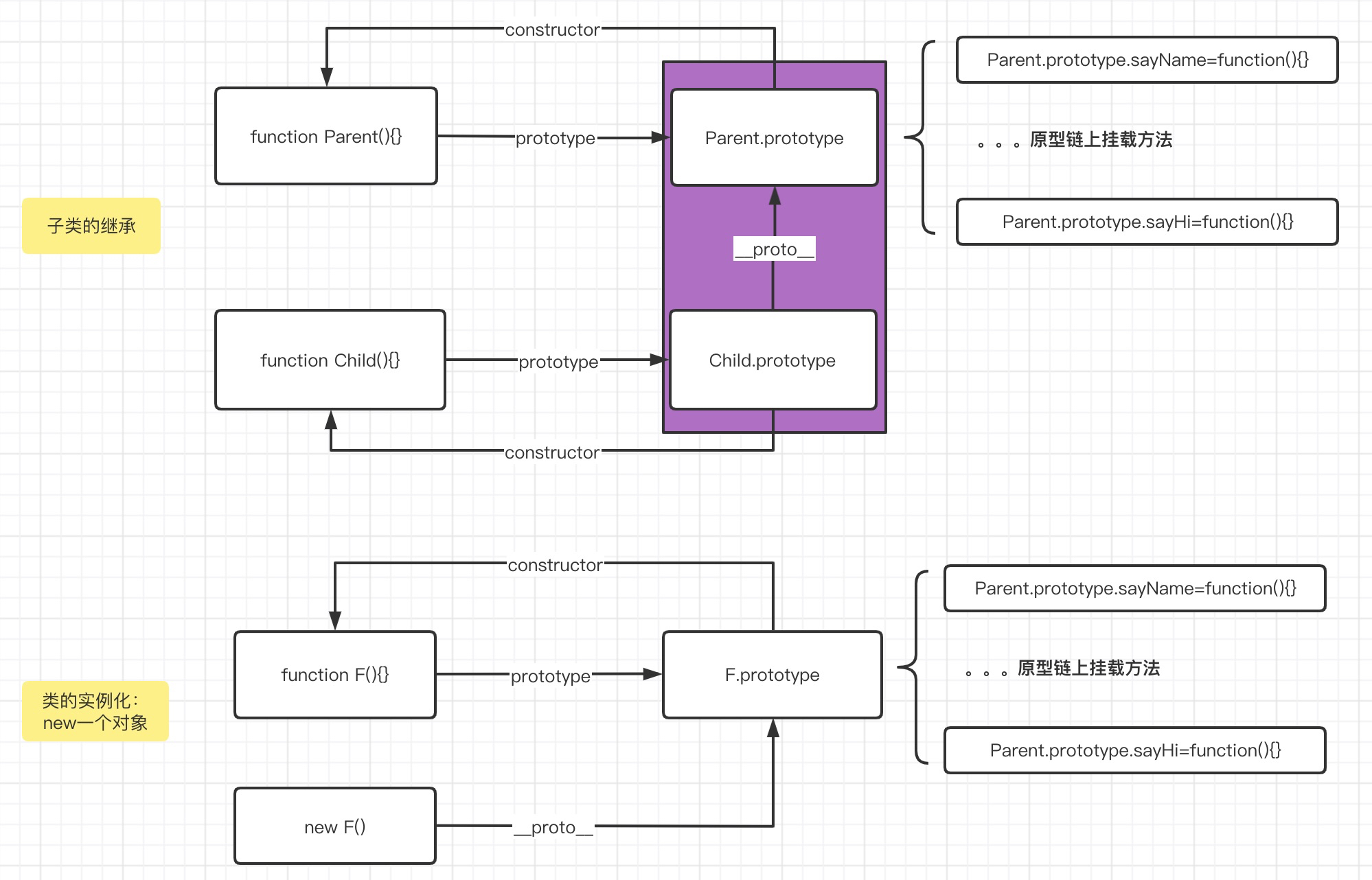
类似 Star.prototype = {} 给原型重新赋值注意不是给原型上添加方法,是重写了原型,此时会丢失构造器,我们需要手动定义构造器,指回构造函数本身
//函数对象的 prototype 原型对象的构造函数指向其本身
function Child2() {
  this.name = "xiaohua2";
}
console.log(Child2.prototype.constructor); //Child2

//类似 Star.prototype = {} 给原型重新赋值,此时会丢失构造器,我们需要手动定义构造器,指回构造函数本身
function Parent() {
  this.name = "xiaohua";
}
Parent.prototype.sayName = function() {
  console.log(this.name + " say name");
};

function Child() {
  Parent.call(this);
}
Child.prototype = Object.create(Parent.prototype); //将子类的原型通过__proto__挂载到父类的原型上,则子类可以使用父类原型上的方法

let child1 = new Child();
child1.sayName(); //xiaohua say name
console.log(child1.name); //xiaohua
console.log(Child.prototype.constructor); //这里应该指向的是Child构造函数,但是却指向了Parent构造函数,所以要做重新指向

Child.prototype.constructor = Child;
console.log(Child.prototype.constructor);
2
3
4
5
6
7
8
9
10
11
12
13
14
15
16
17
18
19
20
21
22
23
24
25
26
Object.create 方法的原理
Object.create = function(obj) {
  function F() {}
  F.prototype = obj;
  return new F(); //new命令实际上也是创建并返回 return result = new F() === Object.create(F.prototype) === Object.create(obj)
};
2
3
4
5
# 3、new 命令的原理
使用 new 命令时,它后面的函数依次执行下面的步骤。
- 1、转换入参为数组,提取构造函数;
- 2、创建一个空对象,将其指向构造函数的 prototype 属性。
- 3、将新建的对象作为 apply 的 this 环境,执行构造函数。
- 4、返回结果
function _new(/* 构造函数 */ constructor, /* 构造函数参数 */ params) {
  var args = [].slice.call(arguments); // 将 arguments 对象[类数组对象]转为数组
  var constructor = args.shift(); // 取出构造函数,此时args变成了去掉constructor的剩余参数
  var context = Object.create(constructor.prototype); // 创建一个空对象,继承构造函数的 prototype 属性context.__proto__ === constructor.prototype
  var result = constructor.apply(context, args); // 以新建对象为this环境,执行构造函数
  return typeof result === "object" && result != null ? result : context; // 如果返回结果是对象,就直接返回,否则返回 context 对象
}

// 实例
function Parent(name, age) {
  this.name = name;
  this.age = age;
}
Parent.prototype.sayName = function() {
  console.log(this.name + "--" + this.age);
};
var p1 = _new(Parent, "xiaohua", 12);
p1.sayName();
2
3
4
5
6
7
8
9
10
11
12
13
14
15
16
17
18
注意
- js 分为函数对象和普通对象,每个对象都有proto属性,但是只有函数对象才有 prototype 属性
- Object、Function 都是 js 内置的函数, 类似的还有我们常用到的 Array、RegExp、Date、Boolean、Number、String
- 属性
__proto__是一个对象,它有两个属性,constructor 和__proto__; - 原型对象 prototype 有一个默认的 constructor 属性,用于记录实例是由哪个构造函数创建;
Person.prototype.constructor == Person// 准则 1:原型对象(即 Person.prototype)的 constructor 指向构造函数本身person01.__proto__ == Person.prototype// 准则 2:实例(即 person01)的proto和原型对象指向同一个地方
汇总一下
- 每个函数对象都有一个 prototype 属性,用来存放一些公共方法,通过
__proto__属性可以追溯到其上级的 prototype 属性上,从而构成原型链,使用上级原型上的方法; - 每个函数对象的 prototype 属性上的 constructor 等于其构造函数,也就是用来记录该实例是由哪个构造函数创建;
# 4、数据共享性
指的是实例化类后,示例对象上数据的共享,不是类继承
# 4.1 在构造函数中定义的属性和方法
function Parent(age, address) {
  this.name = "xiaohua";
  this.data = {
    name: this.name,
  };
  this.age = age;
  this.info = {
    address: address,
  };
  this.say = function() {
    console.log(this.name + "," + this.age);
  };
}
var p1 = new Parent(12, "bj");
var p2 = new Parent(12, "bj");
var p3 = new Parent(22, "sh");

//构造函数中的基础数据无论是写死的还是传入的,是同一个值
console.log(p1.name === p2.name); //true
console.log(p1.age === p2.age); //true

//构造函数中的引用数据,无论是写死的还是外部传入,均不共享,不是同一个值
console.log(p1.data === p2.data); //false
console.log(p1.info === p2.info); //false

//方法类似引用数据,不共享,不是同一个值
console.log(p1.say === p2.say); //false
2
3
4
5
6
7
8
9
10
11
12
13
14
15
16
17
18
19
20
21
22
23
24
25
26
27
# 4.2 通过原型添加方法
构造函数通过原型分配的函数,是所有对象共享的。
function Star(name) {
  this.name = name;
}
Star.prototype.sing = function() {
  console.log("我爱唱歌", this.name);
};
let stu1 = new Star("小红");
let stu2 = new Star("小蓝");
console.log(stu1.sing === stu2.sing); //true
2
3
4
5
6
7
8
9
# 5、class 继承
- 属性在构造函数中使用 call
- 方法在原型上使用
__proto__挂载到父类
function Parent(name, age) {
  this.name = name;
  this.age = age;
}
Parent.prototype.say = function() {
  console.log(this.name, this.age);
};

function Child(name, age, address) {
  Parent.call(this, name, age); //这里继承属性
  this.address = "shanghai";
}
Child.prototype = Object.create(Parent.prototype); //这里继承方法
Child.prototype.constructor = Child; //由于重写了 prototype 属性,所以这里要重置构造函数

Child.prototype.sayAddress = function() {
  //这里不要使用剪头函数,以免this指向window
  console.log(this.address);
};

let child1 = new Child("xiaohua", 12, "bejing");
child1.say(); //xiaohua 12
child1.sayAddress(); //shanghai
2
3
4
5
6
7
8
9
10
11
12
13
14
15
16
17
18
19
20
21
22
23
根据第 3 节中 new 命令原理,上面
Child.prototype = new Parent()相当于在返回的 Child.prototype 的__proto__链上挂载到 构造函数 Parent 的 prototype;new 中核心使用的也是Object.create,所以使用Child.prototype = new Parent()等同于Child.prototype = Object.create(Parent.prototype);,但是这里不建议使用Child.prototype = new Parent(),因为 new 一个对象的时候,会执行构造函数,所以会导致重复执行构造函数。
# 6、ES6 继承
class Parent {
  constructor(name, age) {
    this.name = name;
    this.age = age;
  }
  say = function() {
    console.log(this.name, this.age);
  };
}
class Child extends Parent {
  constructor(name, age, address) {
    super(name, age);
    this.address = address;
  }
  sayAddress = function() {
    console.log(this.address);
  };
}

let child1 = new Child("xiaohua", 12, "北京");
child1.say();
child1.sayAddress();
2
3
4
5
6
7
8
9
10
11
12
13
14
15
16
17
18
19
20
21
22